
Professional Integrated Fire and Security Systems Installer UK

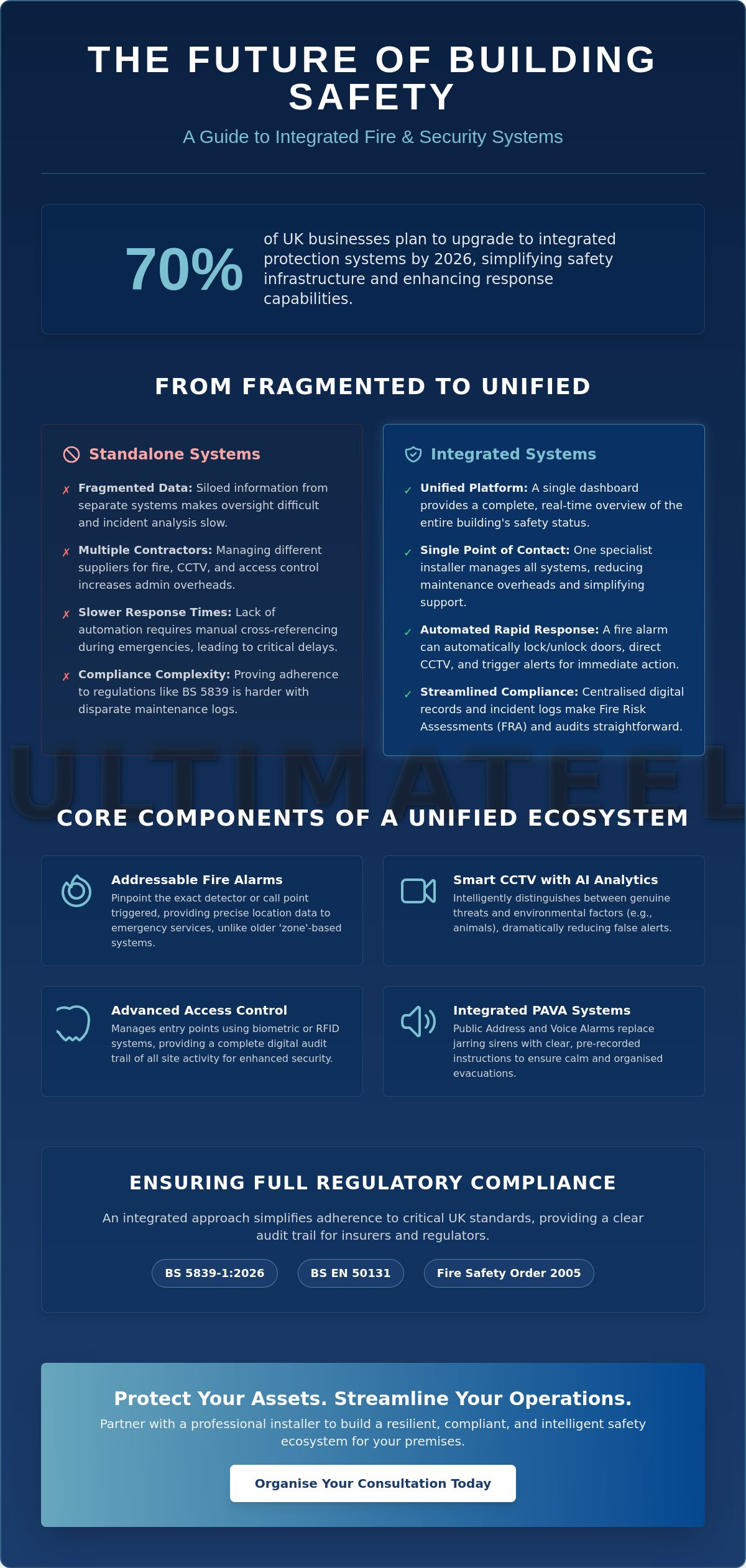
70% of UK businesses plan to upgrade to integrated protection systems by 2026 as they seek to simplify their safety infrastructure. You've likely felt the strain of managing separate contractors for fire alarms, CCTV, and access control, only to end up with fragmented data that's difficult to act upon. Partnering with a professional integrated fire and security systems installer ensures your building meets the stringent requirements of BS 5839-1:2026 whilst removing the friction of siloed reporting and mismatched hardware.
We recognise that maintaining compliance with the Regulatory Reform (Fire Safety) Order 2005 requires a methodical, highly capable approach. In this article, you'll discover how a unified fire and security ecosystem protects your assets and streamlines your daily operations. We will examine how a single point of contact provides full regulatory peace of mind and significantly improves response times during critical emergencies through intelligent, connected technology that bridges the gap between traditional trade skills and modern digital infrastructure.
Key Takeaways
Understand how synchronising fire detection, CCTV, and access control into a single platform eliminates fragmented data and improves building oversight.
Learn how unified systems help you maintain compliance with the latest UK fire safety regulations, including BS 5839-1:2026.
Discover how a professional integrated fire and security systems installer reduces maintenance overheads by replacing multiple contractors with one specialist contact.
Compare the operational advantages of automated integrated alerts against the slower response times of traditional standalone hardware.
Identify the core components of a modern safety ecosystem, from addressable fire alarms to AI-powered CCTV analytics.
Table of Contents
What is an Integrated Fire and Security System?
Integration represents the technical synchronisation of fire detection, intruder alarms, CCTV, and access control into a single, cohesive network. Historically, these systems operated as siloed hardware installations, often requiring separate cabling, different software interfaces, and independent maintenance schedules. A professional integrated fire and security systems installer moves beyond this fragmented approach by utilising unified building management platforms. This shift ensures that hardware from different manufacturers can often be brought under a single management umbrella, provided they adhere to open communication protocols. This convergence relies heavily on IP-based networking, where modern digital infrastructure allows diverse components to communicate in real time across a local area network. Centralised monitoring is the primary outcome of this architecture, ensuring that alerts from any system are processed through a single point of authority for a rapid emergency response.
The Convergence of Life Safety and Security
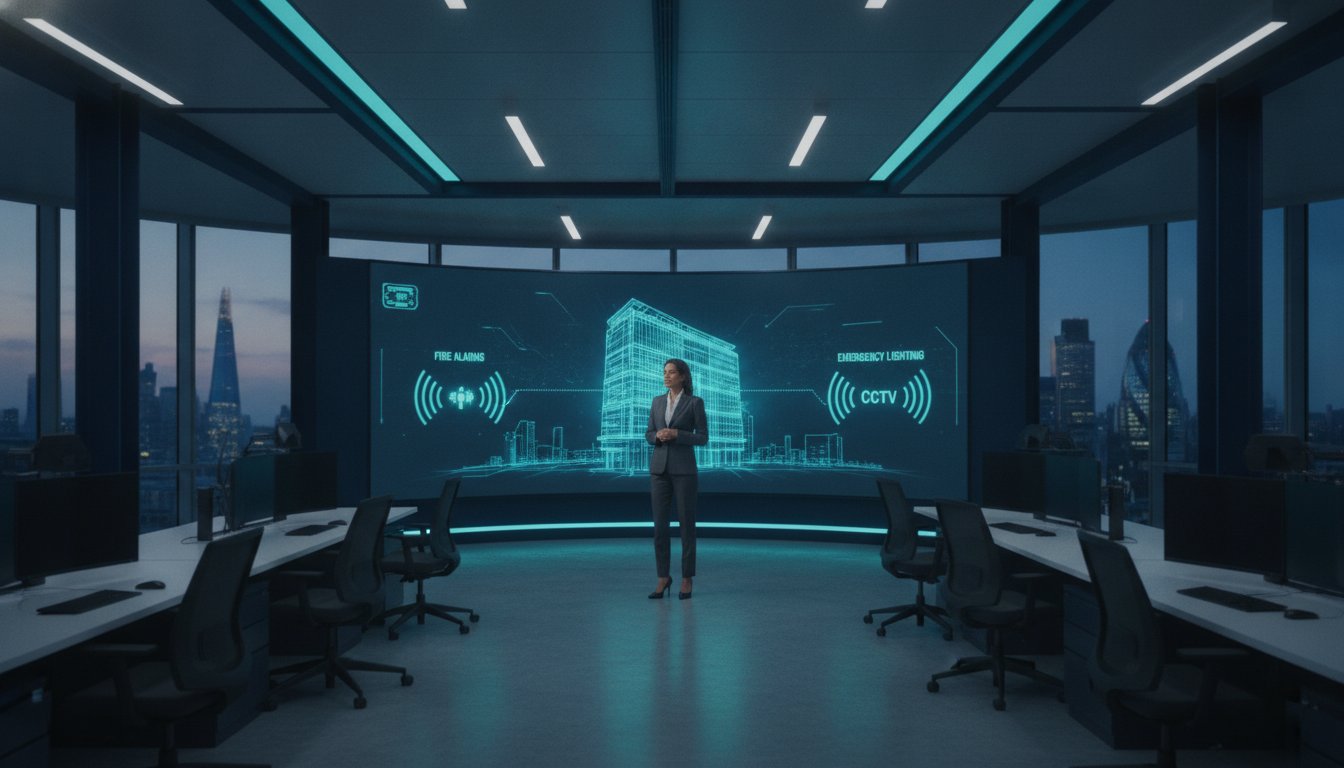
Modern software has transformed how life safety and security systems interact. In a unified environment, a fire panel trigger can automatically initiate security protocols, such as switching nearby CCTV cameras to high-resolution recording or instantly unlocking electronic fire exits to facilitate safe evacuation. This level of automation removes the risk of human error during an evacuation, where manual overrides might otherwise be forgotten. The transition from legacy analogue wiring to sophisticated digital infrastructure means that data flows seamlessly. Building managers gain superior situational awareness because they don't have to cross-reference multiple screens or physical panels. A single dashboard provides a comprehensive view of the entire facility's status, allowing for more informed decision-making during high-pressure incidents.
UK Standards and Regulatory Compliance
Adherence to national standards is a non-negotiable aspect of any installation. Security alarm systems must comply with BS EN 50131, whilst fire detection systems are governed by the rigorous requirements of BS 5839. Using an integrated fire and security systems installer who understands these overlapping regulations is vital for maintaining insurance validity. Many insurers require proof of third-party certification before they'll provide cover for commercial or industrial premises. An integrated approach also simplifies the annual Fire Risk Assessment (FRA) process. When your systems are unified, generating the necessary maintenance logs and incident reports becomes a matter of digital record-keeping rather than manual data collection from disparate sources. This methodical documentation builds a clear audit trail that demonstrates your commitment to building safety and legal compliance.
Core Components of a Unified Safety Ecosystem
A unified safety ecosystem relies on high-specification hardware that communicates across a common digital protocol. Unlike basic standalone setups, these components function as an intelligent network where every device informs the others. A professional integrated fire and security systems installer ensures that these parts aren't just installed, but are programmed to react to specific triggers. This requires a central control hub that acts as the brain of the operation, processing signals from every sensor and executing pre-defined logic to protect both life and property. For those looking to modernise their infrastructure, consulting an integrated fire and security systems installer is the first step toward a more resilient building.
Addressable Fire Alarms: These systems pinpoint the exact detector or call point triggered, providing precise data for emergency services.
Smart CCTV: Utilising AI analytics, these cameras distinguish between genuine threats and environmental movement, reducing false alerts.
Access Control: Biometric and RFID systems manage entry points whilst providing a digital audit trail of all site activity.
Integrated PAVA: Public Address and Voice Alarm systems replace standard sirens with clear, pre-recorded instructions to manage evacuations calmly.
Advanced Fire Detection and Life Safety
The distinction between conventional and addressable fire panels is significant in an integrated environment. Conventional panels only identify a broad "zone" of activity, whilst addressable systems provide the specific room number or floor location. This precision is essential for meeting the requirements of the Regulatory Reform (Fire Safety) Order 2005, which mandates appropriate safety measures based on building risk. Advanced setups also incorporate smoke ventilation (AOV) and disabled refuge call points into the main fire loop. Fire alarm systems interface with building power through dedicated, fire-resistant circuits to ensure continuous operation during emergency events.
Smart Security: CCTV and Access Control Synergy
Integration allows for a level of verification that standalone systems cannot match. When a fire alarm triggers, the system can automatically pull occupancy data from the access control software, telling fire wardens exactly how many people are still in the building. Similarly, CCTV triggers can alert security teams to unauthorised access in real-time by focusing cameras on the specific door where an RFID card was denied. For managers of multi-site commercial portfolios, cloud-based management platforms allow for the remote oversight of security and fire status across several locations from a single device. This centralized approach ensures that high standards of safety are maintained consistently, regardless of the physical distance between sites.
Standalone vs. Integrated Systems: A Strategic Comparison
Standalone hardware operates in isolation. This creates a dangerous lag during critical incidents. Whilst a standalone alarm might sound in a specific zone, the building manager is often left blind until they can physically reach the control panel or the location of the alert. Choosing a professional integrated fire and security systems installer changes this dynamic by creating a responsive, communicative network. In an integrated setup, the moment a fire detector is triggered, the nearest CCTV camera automatically pivots and displays a live feed on the central dashboard. This allows for instant visual verification, helping staff distinguish between a genuine emergency and a false alarm caused by dust or steam. This multi-sensor verification is a primary tool for reducing the disruption and cost associated with unnecessary building evacuations.
Data accuracy is another area where integrated systems outperform fragmented ones. Standalone systems generate separate logs that managers must manually cross-reference to reconstruct an event. This is time-consuming and prone to human error. A unified platform provides a single, chronological report of every event, from the initial sensor trigger to the final system reset. This level of detail is invaluable for insurance claims and internal safety audits. Partnering with an integrated fire and security systems installer also simplifies your maintenance schedule. Instead of coordinating multiple service visits from different contractors, you benefit from a single, comprehensive inspection that covers every component of your safety infrastructure.
Operational Efficiency and Emergency Response
Integration allows for the automation of complex building behaviours that would otherwise require manual intervention. During a fire event, the system can be programmed to instantly shut down HVAC units to prevent smoke from being pulled through the ventilation shafts. Simultaneously, access-controlled doors can be set to "fail-safe" mode, unlocking automatically to ensure clear egress routes. This removes the human error factor during high-stress situations. Real-time visual verification via integrated CCTV feeds ensures that security teams can direct emergency services to the exact point of entry, potentially saving vital minutes during a rescue operation.
Total Cost of Ownership (TCO) and Maintenance
The long-term ROI of an integrated system is often superior to standalone alternatives. Whilst the initial technical configuration may be more sophisticated, the reduction in cabling and shared digital infrastructure lowers the overall footprint of the installation. Maintenance overheads are significantly reduced because a single specialist team can service the entire ecosystem. Furthermore, insurance premiums for commercial properties often reflect the quality of the safety systems in place. Utilising an installer with NSI or SSAIB certification provides the documented proof of competence that insurers require to offer more competitive rates and valid cover.
Choosing the Right Integrated Systems Installer
Selecting an integrated fire and security systems installer requires a partner who understands the complex intersection of high-voltage electrical work and low-voltage digital infrastructure. A versatile contractor should possess the multi-disciplinary expertise necessary to manage electrical installations alongside specialist safety hardware. This breadth of knowledge ensures that your power supply and data networks are robust enough to support advanced security protocols without failure. You should prioritise installers who offer national coverage, as this ensures a consistent standard of workmanship and reporting across your entire property portfolio. Scalability is equally important; your chosen partner must be capable of expanding your system as your business requirements evolve, rather than locking you into a restrictive, proprietary setup.
Avoid "off-the-shelf" security bundles that promise a one-size-fits-all solution. Every building has a unique risk profile and architectural layout that demands a bespoke design. A capable installer will assess your specific needs, such as the integration of refrigeration services or home cinema rooms in high-end residential projects, ensuring that safety systems don't interfere with lifestyle technology. Reliability is built on accessibility, so verify that your contractor provides a 24-hour call out service. Knowing that a specialist is available at any hour to resolve a system fault provides the established stability and quiet confidence that building managers require. For a partner that offers this level of comprehensive support, you can contact our specialist team to discuss your project requirements.
Design, Commissioning, and Maintenance
The process begins with a comprehensive site survey. This methodical assessment identifies potential blind spots in CCTV coverage and ensures that fire detectors are placed in accordance with the specific environmental conditions of each room. During the commissioning phase, the installer programs the logic that governs how systems talk to each other, such as how access control points react during a fire alarm trigger. Handover should include full training for your staff to ensure they are comfortable navigating the central dashboard. Preventative maintenance contracts are essential for system longevity, as they identify component wear before it leads to a critical failure, keeping your infrastructure at peak performance levels.
Accreditations and Technical Literacy
Technical literacy is the foundation of a safe installation. Contractors must hold recognised accreditations such as NICEIC for electrical work, alongside NSI or SSAIB certifications for security systems. These badges of competence prove that the installer's work is regularly audited against the highest industry standards. An installer who understands both high-voltage power distribution and low-voltage signal processing can ensure that your safety ecosystem is electrically sound and digitally secure. Third-party certification provides the verifiable evidence required to demonstrate legal compliance with UK fire safety and security standards. This professional oversight protects your insurance validity and ensures that your building remains a safe environment for all occupants.
The Ultimate Electrical Group: Your National Integration Partner
Ultimate Electrical Group Ltd provides a unified solution for property owners and building managers who require more than just hardware. We act as a single point of authority for complex requirements, removing the friction and data silos that occur when multiple contractors manage individual systems. As a professional integrated fire and security systems installer, we bridge the gap between traditional electrical contracting and high-end technological integration. Our national reach allows us to deliver consistent results for industrial, commercial, and residential clients across the UK, ensuring that every site in a portfolio adheres to the same high standards of safety and compliance.
We are a safe pair of hands for projects of any scale. Our expertise extends beyond simple repairs to the delivery of specialised digital infrastructure that supports life safety and asset protection. By treating fire alarms, CCTV, and access control as a single, intelligent ecosystem, we ensure that your building's response to an emergency is automated, verified, and efficient. This methodical approach projects an image of established stability, giving you the confidence that your infrastructure is managed by an authoritative expert and a versatile problem solver.
Bespoke Solutions for Every Sector
We don't believe in generic security packages because every sector has specific operational demands. Our work ranges from securing industrial refrigeration units to installing sophisticated entry management for high-end residential estates. If your project involves lifestyle technology, we can seamlessly integrate fire safety with home cinema rooms or bespoke AV setups without compromising the aesthetic or functional requirements of the space. This methodical approach to design ensures that every system is fit for purpose and fully compliant with current UK regulations. For those starting a project from the ground up, we are an Expert Electrical Installation Company UK that provides the robust foundational infrastructure needed for advanced safety loops.
Commitment to Quality and System Longevity
Our background in professional electrical contracting provides a distinct advantage regarding system stability. We understand the precise power requirements and cabling standards that support long-term reliability in both domestic and heavy industrial environments. We offer proactive maintenance plans that are tailored to the specific needs of your building, identifying potential issues before they lead to a critical failure, keeping your infrastructure at peak performance levels. Total peace of mind is provided by our dedicated 24 hour call out service, ensuring a specialist is always available to resolve faults and maintain the integrity of your safety ecosystem. Contact Ultimate Electrical Group Ltd today to discuss your integrated system requirements and discover how a unified approach protects your assets.
Securing Your Building with Unified Infrastructure
Transitioning from fragmented hardware to a unified safety ecosystem is a strategic step toward total building resilience. By synchronising fire detection with CCTV and access control, you eliminate the dangerous lag times associated with standalone systems. This methodical approach ensures your premises remain fully compliant with evolving UK safety standards whilst providing a clear, digital audit trail for insurance purposes. Partnering with a professional integrated fire and security systems installer allows you to consolidate your maintenance requirements under a single, highly capable specialist.
Ultimate Electrical Group Ltd offers comprehensive national coverage and proven expertise across electrical, fire, and security disciplines. Our commitment to system stability is supported by a 24-hour emergency call-out service, ensuring that your infrastructure is always in a safe pair of hands. You can enquire about our Integrated Fire and Security Solutions today to streamline your building management and enhance your site security. We look forward to helping you build a safer, more efficient environment for your occupants and assets.
Frequently Asked Questions
What are the main benefits of integrating fire and security systems?
The primary benefits include centralised management, reduced false alarms through visual verification, and automated emergency protocols such as unlocking fire exits. This unified approach removes the lag times associated with manual cross-checking between separate panels, allowing for a more decisive response during critical incidents.
Is it more expensive to install an integrated system than separate ones?
Whilst the initial technical configuration may require a more sophisticated digital infrastructure, the total cost of ownership is generally lower over the system's lifespan. You save on long-term maintenance by using a single contractor and reduce cabling costs during the installation phase by sharing a common IP network.
Do integrated systems comply with UK fire safety regulations?
Integrated systems fully comply with UK regulations as long as they are designed and commissioned by a qualified integrated fire and security systems installer. Adherence to BS 5839-1:2026 for fire detection and BS EN 50131 for intruder systems remains the benchmark for legal and insurance validity.
Can I integrate my existing security cameras with a new fire alarm system?
Integration with existing cameras is often possible if your hardware supports modern IP networking and open communication protocols. A site survey will identify whether your current CCTV can interface with a new fire alarm loop or if specific encoders are required to bridge the technical gap between different generations of hardware.
What happens to the integrated system during a power cut?
Integrated systems utilise uninterruptible power supplies (UPS) and standby batteries to ensure continuous operation during a power failure. These backups are designed to meet specific British Standards, providing several hours of full system functionality to ensure the building remains protected until mains power is restored.
How often do integrated fire and security systems need servicing?
Servicing intervals are governed by British Standards, typically requiring fire alarm inspections at least every six months. An integrated maintenance contract allows these visits to coincide with security system checks, ensuring all components from smoke detectors to access control hubs remain operational through a single service visit.
Can an integrated system be managed remotely via a smartphone?
Modern cloud-based platforms allow you to manage your entire safety ecosystem remotely via a smartphone or tablet. You can receive real-time alerts, view live CCTV feeds during an alarm event, and check the status of access-controlled doors from any location, which is particularly useful for multi-site managers.
What should I look for in a professional integrated systems installer?
You should prioritise an integrated fire and security systems installer with multi-disciplinary accreditations such as NSI, SSAIB, and NICEIC. It is vital to choose a partner who offers 24-hour emergency support and possesses the technical literacy to manage both high-voltage electrical work and low-voltage specialist safety systems.

Comments